
Endgame Era
2008-2010
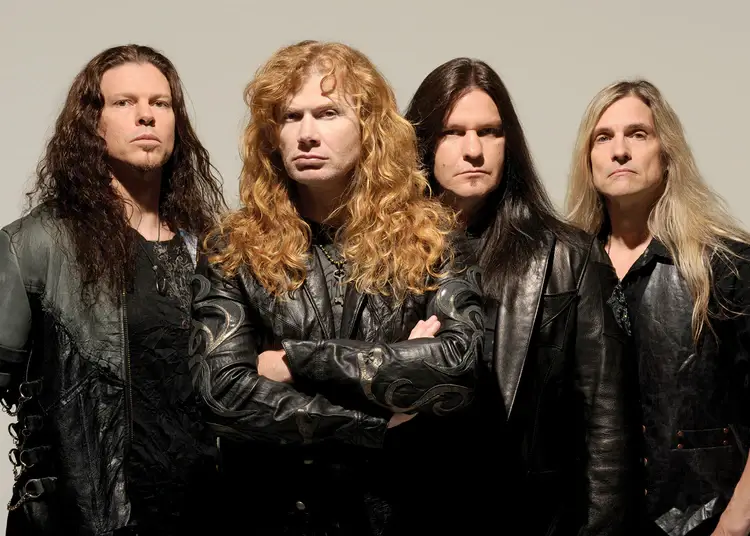
The Endgame Era represented one of the most dynamic and artistically ambitious periods in Megadeth's recent history, characterized by significant lineup changes, exceptional musical achievements, and historic events that would consolidate the band's legendary status in the world metal landscape. This period was distinguished by the incorporation of virtuoso talent, the creation of technically superior music, and participation in unique moments that would define Megadeth's legacy for new generations. In 2008, following Glen Drover's departure, Dave Mustaine once again faced the challenge of finding a lead guitarist who could not only fill the technical void left by Drover but elevate the band's musical standards even higher. The solution came with the recruitment of Chris Broderick, a virtuoso guitarist with an impressive curriculum that included significant experience with technically demanding bands like Jag Panzer and Nevermore. Broderick brought an exceptional level of technical virtuosity that immediately elevated Megadeth's instrumental capabilities to new heights. The new stable lineup consisting of Dave Mustaine (vocals and rhythm guitar), Chris Broderick (lead guitar), James LoMenzo (bass), and Shawn Drover (drums) represented a powerful combination that fused Mustaine's compositional experience and leadership with Broderick's revolutionary technical virtuosity, LoMenzo's rhythmic solidity, and Drover's energetic precision. This alignment immediately demonstrated exceptional musical chemistry that would translate into some of the most complex and technically challenging compositions in Megadeth's discography. With this formation, the band embarked on recording the album 'Endgame' (2009), a project that would become one of the most acclaimed works of Megadeth's post-rebirth era. The album particularly stood out for incorporating extraordinarily complex guitar solos and Broderick's superior technique, who demonstrated his ability to create both moments of pure virtuosity and emotionally moving melodic passages that significantly enriched the band's sonic palette. 'Endgame' not only represented a return to more aggressive and technical thrash metal but also showcased Megadeth's continued evolution as composers and musicians. Broderick's contributions were particularly notable, as he brought a fresh approach to guitar solos that combined extreme speed, immaculate technical precision, and melodic creativity, establishing new standards for guitarwork within Megadeth's context. The Mustaine/Broderick/LoMenzo/Drover formation proved extraordinarily effective in the live context, performing extensive tours that included presentations on the world's most prestigious stages. Their stage power and musical chemistry translated into memorable shows that reaffirmed Megadeth's position as one of the most formidable live forces in contemporary metal. The culminating point of this era came with Megadeth's participation in the historic Big Four tour in 2010, a legendary event that brought together for the first time in decades the four foundational thrash metal bands: Metallica, Slayer, Anthrax, and Megadeth. This tour not only represented a historic moment for the genre but also provided Megadeth with a massive international platform to demonstrate their continued relevance and ability to compete musically with their most successful contemporaries. The Big Four tour became a celebration of thrash metal that transcended historical rivalries and brought together multiple generations of fans in a unique musical experience. For Megadeth, participating in this event represented both recognition of their historical importance and validation of their contemporary artistic vitality. During this period, the band also embarked on a special project that would honor one of the most important moments of their legacy: celebrating the 20th anniversary of 'Rust in Peace,' universally considered a thrash metal masterpiece. In 2010, Megadeth released the CD/DVD 'Rust in Peace Live,' which documented this specific formation performing the complete 'Rust in Peace' album in concert. This project was particularly significant because it demonstrated the new formation's ability to execute with precision and energy the most technically demanding material from Megadeth's classic era. Broderick's interpretations of iconic compositions like 'Holy Wars' and 'Hangar 18' were especially acclaimed, as he managed to honor the original versions while contributing his own distinctive technical character. However, the most surprising and emotionally resonant aspect of this era came in late 2010 with the announcement of David Ellefson's return, Megadeth's co-founder and classic bassist, after eight years of absence since his departure in 2002. This return represented one of the most significant moments in the band's recent history, as Ellefson had been a fundamental part of Megadeth's musical identity since their beginnings in 1983. Ellefson officially resumed bass duties in February 2010, replacing James LoMenzo initially to participate in the 'Rust in Peace' anniversary tour. His return was received with enthusiasm by both fans and the band itself, as it represented a reconnection with Megadeth's historical roots and the possibility of recapturing elements of the musical chemistry that had characterized the band's most successful eras. What was initially conceived as temporary participation for the anniversary tour quickly evolved into complete reintegration when Ellefson officially became a permanent member of Megadeth again. This development fundamentally transformed the band's dynamic and established the foundation for a new era that would combine the historical tradition represented by Ellefson with the contemporary virtuosity contributed by Broderick. The Endgame Era, therefore, represented not only a period of exceptional artistic achievements and significant historical events but also a crucial transition that would lead Megadeth toward a new configuration that would honor both their classic legacy and future potential, establishing precedents for the continued evolution of one of the most important and enduring bands in world thrash metal.
Albums
Endgame
Rust in Peace Live

Watch all the official music videos